
Great Spotted Woodpecker
The Ultimate Guide to the Great Spotted Woodpecker
The Great Spotted Woodpecker is one of the most iconic and recognisable birds in the UK. With its striking black, white, and red plumage and distinctive drumming sound, this fascinating bird has captured the curiosity of nature lovers, photographers, and birdwatchers alike. Whether you are spotting one in your local park or hearing its call echo through the woodland, learning about the Great Spotted Woodpecker opens a door into the hidden world of British birdlife. Known for their strong territorial instincts and fascinating behaviours, these birds are a joy to observe throughout the year. With persistence, you can even begin to recognise individuals by their patterns and routines. They also represent a rare example of a woodland bird that has successfully adapted to human modified environments, including gardens and suburban spaces.
This comprehensive guide covers everything you need to know about the Great Spotted Woodpecker. From identification and behaviour to breeding, feeding habits, distribution, conservation, and fun facts, this is your go to source for understanding this remarkable species. The aim is not only to inform but to inspire a deeper appreciation of this bird’s place in our natural world. Whether you are a beginner birder or an experienced enthusiast, this detailed article will help you sharpen your skills and knowledge. By the end of it, you will have the tools to observe, enjoy, and even help protect this charismatic member of the UK’s birdlife.
Identification Guide
What Does a Great Spotted Woodpecker Look Like
The Great Spotted Woodpecker has a bold and distinctive appearance. Key features include:
- Black upperparts with white shoulder patches
- Creamy white underparts
- Bright red under the tail (visible in both sexes)
- Males have a red patch on the back of the head
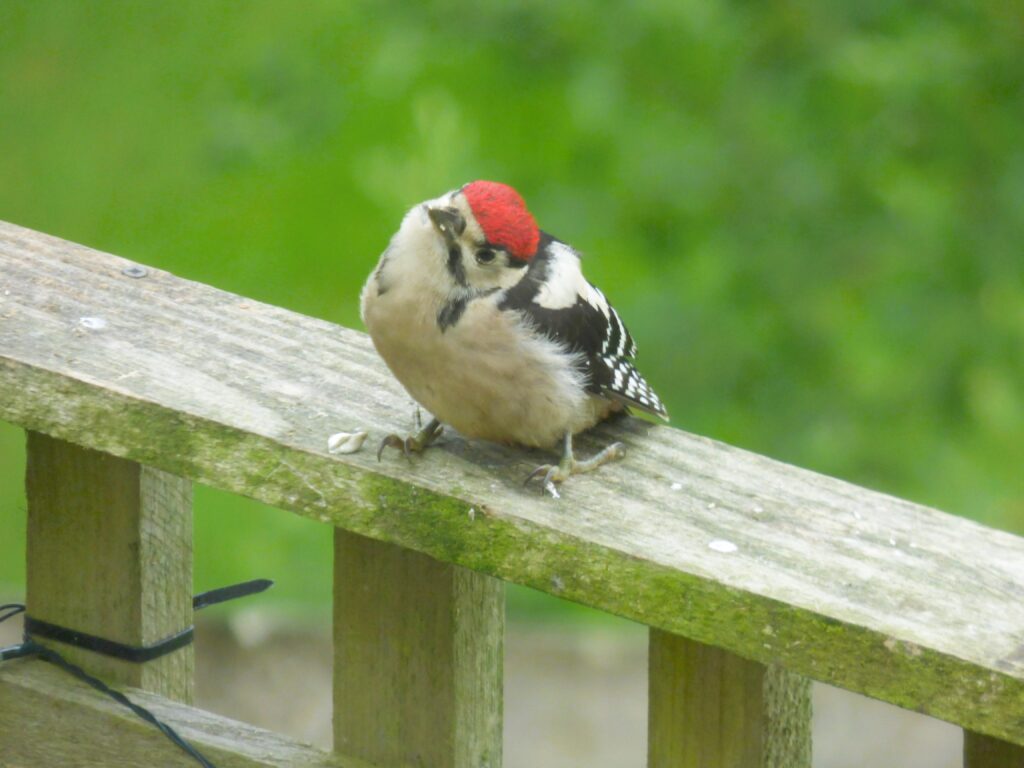
- Juveniles have a red crown on top of the head
- Medium sized body, about 23 centimetres long with a wingspan of 34 to 39 centimetres
- Strong, chisel like beak used for drumming and feeding
Their flight is typically undulating, with bursts of rapid wingbeats followed by short glides. This bobbing flight pattern helps distinguish them from other birds in motion. Their feet are zygodactyl, meaning two toes point forward and two backward, which provides a firm grip on vertical surfaces. In low light or shaded woodland, their plumage can appear muted, but in full sunlight, the red and black contrast can be remarkably vivid. Observing these birds at close range, especially when they visit garden feeders, allows you to appreciate the detailed textures of their feathers and the mechanical precision with which they peck and probe. This bird is perfectly designed for its lifestyle, compact, powerful, and equipped with all the tools it needs to thrive.
In addition to their colouring and movement, Great Spotted Woodpeckers have a very deliberate way of moving through their environment. They climb tree trunks with agility, using their tail feathers as stabilisers, and pause often to listen or scan for movement beneath the bark. Their eyes are placed forward on their head, giving them excellent depth perception, which is vital for precise drumming and feeding. If you look closely, their beak is slightly curved and very strong, ideal for chiselling away at tree bark or creating nest cavities. These adaptations are not just for survival but for thriving in their specific niche within woodland ecosystems.
Male vs Female vs Juvenile
- Males Woodpeckers have a red patch on the nape of the neck
- Females Woodpeckers lack this red patch entirely
- Juveniles Woodpeckers have a red crown which fades as they mature
Being able to distinguish these subtle differences is useful for birdwatchers, especially during the breeding season. Juvenile plumage begins to shift rapidly within weeks of fledging, and by mid to late summer, the red crown fades and adult markings develop. Male and female woodpeckers behave similarly in many ways, but during the nesting season, males are often more visible due to their territorial drumming. Observing behaviour alongside plumage can be particularly helpful, for example, males may spend longer at feeding stations and show more assertiveness toward rivals. Familiarity with these markers can enrich your watching experience and give you a deeper sense of the bird’s life cycle. For those filming or documenting woodpeckers, noting these features also helps build a better understanding of individual routines and family structures in your local area.
Juveniles often appear more uncertain in their movements. They may spend time watching adults, mimicking drumming, or attempting to forage with varying levels of success. You can sometimes spot juvenile birds hesitating on the feeder pole or fluttering awkwardly around branches before managing a confident landing. This period of observation and trial and error is essential to their development. If you are lucky enough to observe a family group regularly, you may begin to recognise individual juveniles by subtle differences in behaviour, feeding technique, or the timing of their visits. As the season progresses, these behaviours evolve and help each bird mature into a fully fledged member of its territory.
Habitat and Distribution
The Great Spotted Woodpecker is widespread throughout the UK and much of Europe. It is a resident species, meaning it does not migrate, and can be found all year round in a variety of environments. The key to their preferred habitat is the presence of mature trees, especially those with dead or decaying wood, which they rely on for nesting and feeding. They are typically found in:
- Broadleaf and mixed deciduous woodland
- Urban and suburban parks with mature trees
- Large private gardens and orchards
- Wooded farmland with hedgerows
- Nature reserves and conservation woodlands
Historically more reclusive, the Great Spotted Woodpecker has become increasingly comfortable in human environments, especially where suitable feeding stations are maintained. This adaptability has allowed them to expand their range and increase in population. In fact, garden sightings have surged in recent decades, with many people now encountering these birds regularly on feeders, especially during the winter months when natural food is scarce. In urban areas, they have been known to nest in unexpected places, including wooden utility poles and even fence posts. Their presence is a sign of a healthy local ecosystem, particularly where there is a mix of natural decay and managed green space.
They are also present in many areas of Europe and parts of Asia, making them one of the most widespread woodpecker species globally. However, their behaviour and patterns can vary slightly depending on region and habitat. In densely forested areas, they may be harder to spot and more reliant on natural food sources. In more populated or fragmented landscapes, they tend to make the most of garden feeders and become familiar faces for observant homeowners. Understanding this species’ flexible approach to territory and feeding can help you support their presence and increase your chances of regular sightings.
Diet and Feeding Behaviour
The diet of the Great Spotted Woodpecker is remarkably varied and shifts with the seasons. During the warmer months, they primarily feed on insects and larvae found beneath tree bark. Using their strong beaks and long, barbed tongues, they can extract beetles, ants, caterpillars, and other invertebrates from deep within the wood. This method of foraging also plays an important ecological role, as it helps control insect populations in the trees they inhabit. In late spring and early summer, they may occasionally raid other birds’ nests to consume eggs or fledglings, a behaviour that can seem brutal but is part of their natural survival strategy.
In autumn and winter, their diet transitions to seeds, nuts, berries, and any food they can gather from feeders. This seasonal shift is a matter of necessity, as insect prey becomes harder to find. They are particularly fond of peanuts and suet blocks in garden settings. Great Spotted Woodpeckers are known to cache food during the autumn months, wedging seeds and nuts into tree bark for later retrieval. They have even been observed using wooden posts or cracks in fences as improvised storage areas. This clever food management allows them to survive harsh winters when natural food is scarce.
Feeding Adaptations
- Long, barbed tongue with sticky saliva to extract insects from deep crevices
- Powerful neck muscles that allow repeated, precise pecking
- Stiff tail feathers that brace their body while they forage vertically
- Wide, shock absorbing skull structure to prevent brain injury from impact
- Ability to memorise locations of food caches for future feeding
Their feeding style is not just efficient, it is also quite spectacular to witness. If you are lucky enough to have them visit your garden, take the time to watch how they manoeuvre around feeders or tree trunks. Their technique is both graceful and intense, with rhythmic tapping and quick, deliberate movements. Observing a Great Spotted Woodpecker feed up close can deepen your understanding of how remarkably adapted these birds are to their environment and the challenges of seasonal survival.
Breeding and Nesting
The breeding season for the Great Spotted Woodpecker typically begins in late April and continues through July. During this time, the birds become especially vocal and territorial, with males frequently drumming to announce their presence and attract a mate. This drumming is not just a mating call but also a declaration of territory. Unlike vocal songbirds, woodpeckers communicate largely through these resonant taps that echo through woodlands and parks. The male and female both take part in locating a nesting site, which is usually excavated into a dead or decaying tree trunk. The process of hollowing out a nest cavity takes one to two weeks, with both birds sharing the work.
The resulting nest hole is a clean, round opening that leads to a deep, vertical chamber. No nesting material is brought in; instead, the woodchips produced during excavation line the bottom. A typical clutch contains four to six white eggs. Both parents share incubation duties, with the male often taking the night shift. Incubation lasts about ten to twelve days, after which the chicks hatch and are fed by both parents. The young remain in the nest for roughly three weeks, during which time they grow rapidly. You may hear their soft begging calls from inside the cavity in the days before they fledge.
Fledging usually occurs in June. Once the chicks leave the nest, they remain close to the parents for another two to three weeks, learning essential skills like foraging, drumming, and navigation. During this time, it is common to see family groups flitting through treetops or visiting feeders together. This learning period is critical, as juveniles must develop the strength, coordination, and awareness needed to survive independently. Watching a juvenile mimic its parent’s behaviour is one of the most rewarding sights for anyone who has followed their journey from egg to fledgling. The breeding cycle of the Great Spotted Woodpecker is an intimate, carefully coordinated process that offers deep insight into their intelligence, instinct, and family bonds.
Behaviour and Communication
Great Spotted Woodpeckers are intelligent, observant birds with a wide range of behaviours that reflect their adaptability and awareness. One of the most well known behaviours is drumming. Unlike other birds that sing, woodpeckers drum to communicate. Drumming is performed by rapidly pecking a resonant surface, such as a hollow branch or telephone pole, to produce a rhythmic sound. Each bird has its own drumming pattern and speed, which may convey identity or intent to rivals and mates. Males drum more frequently during breeding season, but both sexes may do so to mark territory or reinforce pair bonds.
Besides drumming, woodpeckers produce a sharp “kik” call, often heard in flight or during feeding. This call helps them stay in contact with their mate or alert others to their presence. You might also observe a range of body language: crest raising, wing flicking, tail fanning, and even short chases through the canopy. These visual signals add nuance to their communication and play an important role in avoiding conflict. Woodpeckers are solitary outside of the breeding season but become very attentive partners and parents during spring and summer. Their interactions are subtle and complex, demonstrating a level of awareness not often attributed to birds.
They are also extremely curious. Garden woodpeckers often spend time observing their surroundings before landing. They assess safety, check for rivals, and approach feeders with a cautious but calculated mindset. Once comfortable, they will return regularly and can become surprisingly tolerant of human presence. With time and patience, some individuals can even become recognisable visitors, showing preferences for certain types of food or returning at predictable times. Their ability to adapt to different environments and learn from observation sets them apart as a highly intelligent and resourceful species. Understanding these behaviours can help deepen your connection with the birds and make each sighting more meaningful.
Conservation Status and Human Impact
The Great Spotted Woodpecker is currently listed as a species of Least Concern by the International Union for Conservation of Nature. This is due to its stable and increasing population across much of its range. In the UK, the population has doubled since the 1970s, thanks in part to increased woodland conservation, public awareness, and the growing popularity of bird feeders. Their ability to adapt to gardens and urban spaces has also contributed to their success, allowing them to thrive even in areas with limited natural woodland.
However, they are still affected by broader environmental issues. Habitat loss due to tree removal, overmanaged forests, and lack of deadwood can limit their nesting and feeding opportunities. Changes in insect populations, driven by pesticide use and climate change, may also impact their primary food sources. While they are adaptable, they still depend on a healthy ecosystem to maintain their numbers. Supporting native woodland conservation, reducing pesticide use, and maintaining mature trees in urban settings all contribute to their long term well being.
Gardeners and bird enthusiasts can play a vital role in supporting this species. By planting native trees and shrubs, avoiding harmful chemicals, and providing safe, clean feeding stations, individuals can create woodpecker friendly environments. Nest boxes designed for woodpeckers, though less commonly used, can also offer additional nesting opportunities if placed in the right setting. Education and awareness are key. By sharing sightings, promoting responsible wildlife observation, and encouraging local conservation efforts, we can ensure that the rhythmic drumming of the Great Spotted Woodpecker continues to echo through our parks and woodlands for generations to come.
Fun Facts and Final Thoughts
- The Great Spotted Woodpecker’s tongue is so long it wraps around the back of its skull when not in use.
- Drumming is not only a form of communication but also a way to attract mates and warn rivals.
- They can peck up to 20 times per second and strike a surface thousands of times a day without injury.
- Juveniles often practice drumming on inappropriate surfaces like metal poles or fences before they refine their technique.
- Their brain is cushioned by spongy bone and a tight skull to absorb shock.
Woodpeckers have appeared in folklore and stories across cultures, often symbolising persistence, rhythm, and connection to the earth. In some traditions, they are seen as messengers or protectors of trees. Their role in the ecosystem is equally valuable, as they help control insects and create nesting sites used by other birds and mammals.
Whether you’re an experienced birder, a garden enthusiast, or simply someone who enjoys watching nature unfold, the Great Spotted Woodpecker offers an ongoing story of resilience, beauty, and wild intelligence. By paying attention to their habits, supporting local habitat, and enjoying the quiet moments when one appears, you become part of that story too. Keep watching, keep listening, and let their rhythmic drumming remind you of the wild heart still beating in the trees around us.
See our Meet the Birds page for a closer look on our guests at the feeder.